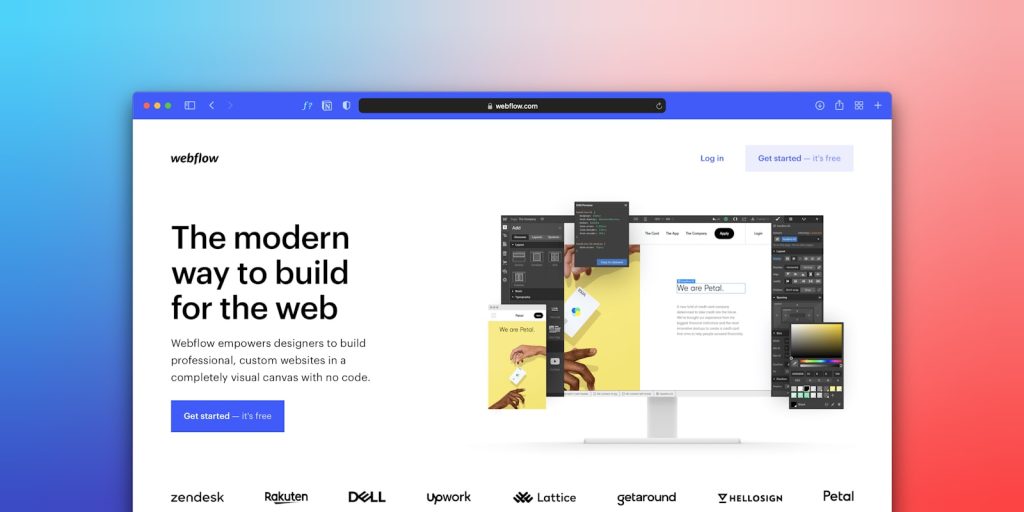
A landing page is any page specifically designed to receive traffic from a particular source and convert that traffic into a specific action. The term is used in two slightly different ways: broadly, it means any page a visitor first “lands on” when arriving at your website; more specifically (and most usefully for local businesses), it refers to a focused page built around a single goal — converting a visitor from a specific campaign or search query into an enquiry, booking, or purchase.
For most Peninsula businesses, the most commercially valuable landing page type is the dedicated campaign page — a page built specifically to receive traffic from a particular suburb, service type, or promotional campaign, and to convert that traffic at the highest possible rate.
How Landing Pages Differ from Standard Website Pages
A standard service page on your website does multiple things: it describes the service, explains your approach, builds trust through credentials and testimonials, links to related services, and invites the visitor to make contact. It’s part of a larger website with navigation to many other pages.
A dedicated landing page does one thing: convert. It typically removes or minimises the site navigation (so there are fewer ways to leave the page without completing the goal), focuses exclusively on a single service or offer and a single audience, and organises every element — headline, content, imagery, social proof, CTA — around a single conversion action.
This focused architecture consistently produces higher conversion rates than standard website pages for traffic with high commercial intent. A visitor who arrives from a Google Ad for “emergency plumber Frankston” at 2am is in a very different state of intent from a visitor casually browsing a plumbing company’s general homepage. A page built specifically for that emergency intent — with the phone number as the centrepiece, explicit availability confirmation, and minimal navigation to distract — converts that high-intent visitor far more effectively than a generic homepage.
When Do Peninsula Businesses Need Dedicated Landing Pages?
Google Ads campaigns. If you’re running Google Ads, dedicated landing pages for each ad group consistently outperform sending all traffic to your homepage. A landing page aligned to the specific search terms in an ad group — same language, same service specificity, same level of geographic precision — produces higher Quality Scores, lower cost per click, and higher conversion rates simultaneously.
Suburb-specific campaigns. For a trades business serving Frankston, Mornington, Mount Martha, Mount Eliza, and Hastings, dedicated landing pages for each suburb — built around the specific service and location — capture the local intent searches for each suburb more effectively than a single service page trying to serve all of them.
Promotional offers. A seasonal promotion — “summer pool maintenance special,” “end of financial year accounting review,” “new client spring cleaning discount” — is better served by a dedicated landing page that presents the offer compellingly and captures it with a focused CTA, rather than a generic services page with a promotional banner added as an afterthought.
At Click Websites, we design landing pages as conversion tools — not just website pages with a different structure. Get in touch to discuss whether dedicated landing pages would improve your current campaign or organic search conversion, or browse our portfolio for examples of our approach.
Frequently Asked Questions
Should a landing page be part of my main website or a separate domain?
For most local businesses, landing pages should be part of your main website (as subpages, not subdomains or separate domains) — this keeps the SEO authority from traffic and backlinks within your main domain, and avoids the management complexity of multiple separate properties. Separate domains for landing pages are typically only worthwhile for specific campaign types where the brand separation is commercially intentional — a sub-brand, a distinct product line, or a campaign with a completely different audience from the main business.
How long should a landing page be?
As long as necessary to complete the conversion job. For high-urgency, simple conversions (emergency services, simple price enquiries), shorter pages — with the CTA above the fold and minimal scrolling required — convert better. For higher-consideration conversions (a $5,000+ service engagement, a long-term professional relationship), more depth — testimonials, credential evidence, process explanation, FAQ content — is needed to build the confidence that precedes commitment. Match the page length to the risk level of the decision you’re asking the visitor to make.
Can my homepage serve as a landing page?
It can receive traffic as a first page, but it typically under-converts relative to a dedicated landing page for specific campaigns. The homepage serves too many purposes — it’s for every possible visitor type, not for a specific visitor arriving from a specific campaign or search. For organic search traffic to general terms (your business name, your primary location search), the homepage is appropriate. For specific campaign traffic or suburb-specific searches, a dedicated page outconverts the homepage consistently.
What should I test on a landing page to improve conversion?
In priority order: the headline (does it match the visitor’s specific intent?), the primary CTA (placement, copy, colour, and the friction of the action it leads to), the social proof elements (which testimonials or credentials are most relevant to this specific visitor?), and the page length (does the visitor need more or less information to feel confident?). Test one element at a time using GA4 or a dedicated A/B testing tool, with enough traffic to produce statistically reliable results before drawing conclusions.
Do landing pages help with SEO?
Suburb-specific and service-specific landing pages built with genuine content depth can rank organically in search results — effectively functioning as both a paid campaign landing page and an organic search result simultaneously. This dual function makes the content investment particularly efficient. However, a page that removes site navigation entirely (the “pure landing page” design for paid campaigns) is not ideal for organic ranking — pages with navigation that contextualise them within the site structure rank better organically.
How many landing pages should a local business have?
As many as there are distinct search intents worth targeting specifically. A trades business serving five suburbs with four main service categories could justify twenty targeted landing pages — one for each service-location combination. The constraint is content quality — each page needs genuinely distinct, useful content to avoid duplicate content problems and to rank or convert effectively. A realistic starting point: your top three service types, in your top three location markets — nine pages that address the highest-commercial-value search intent combinations your business faces.